

 English
 中文简体
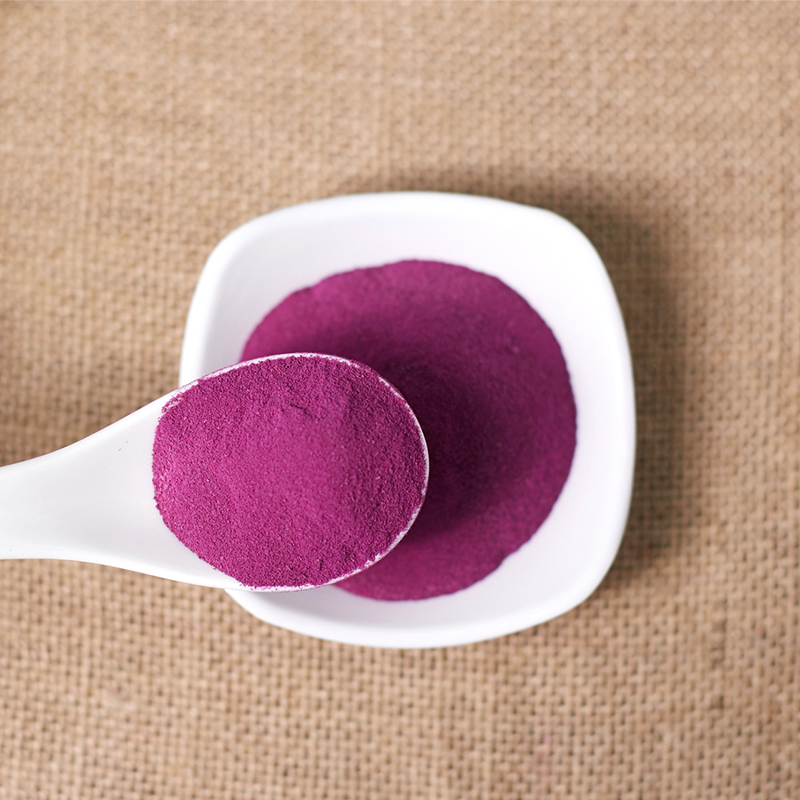
中文简体Purple potato powder has emerged as a versatile ingredient in gluten-free and plant-based food formulations, offering both functional and nutritional benefits. Its natural starches, fiber content, and vibrant purple anthocyanins make it particularly suitable for enhancing texture, color, and flavor in products that traditionally rely on wheat or animal-derived ingredients. This article explores practical applications, formulation strategies, and processing considerations for incorporating purple potato powder into gluten-free and plant-based foods, providing actionable insights for chefs, product developers, and food manufacturers.
Content
- 1 Nutritional and functional profile of purple potato powder
- 2 Applications in gluten-free food products
- 3 Applications in plant-based foods
- 4 Processing and stability considerations
- 5 Comparative advantages over other gluten-free and plant-based ingredients
- 6 Conclusion: maximizing functionality and visual appeal
Nutritional and functional profile of purple potato powder
Purple potato powder contains resistant starch, dietary fiber, and antioxidant-rich anthocyanins, making it a valuable component in plant-based and gluten-free diets. The starch contributes to viscosity, binding, and moisture retention in baked goods, while the fiber supports texture and chewiness that can be challenging to achieve in gluten-free formulations. Anthocyanins not only provide a vibrant purple color but also add functional health benefits such as antioxidant activity.
Key compositional features
- Resistant starch enhances moisture retention and structure in gluten-free baked goods.
- Dietary fiber improves texture, mouthfeel, and satiety in plant-based products.
- Anthocyanins provide natural coloring and antioxidant properties.
- Low allergenic profile makes it suitable for clean-label and allergen-free formulations.
Applications in gluten-free food products
In gluten-free baking, purple potato powder can partially replace wheat flour to improve dough structure, moisture retention, and color. Its natural starch provides binding capacity and elasticity that compensate for the lack of gluten. It is particularly effective in breads, muffins, pancakes, and pasta where structure and mouthfeel are critical. Additionally, purple potato powder can be combined with other gluten-free flours such as rice, sorghum, or oat flour to create a balanced texture and appealing visual appearance.
Practical formulation tips
- Use 10–25% purple potato powder as a partial flour replacement to enhance structure without overwhelming flavor.
- Combine with hydrocolloids such as xanthan gum or guar gum for improved elasticity and crumb texture.
- Adjust hydration levels, as purple potato powder absorbs water and impacts dough consistency.
Applications in plant-based foods
Purple potato powder is equally useful in plant-based formulations, including meat analogues, dairy alternatives, sauces, and snack products. Its starch provides binding and thickening, while its color contributes visual appeal to products such as plant-based burgers, gnocchi, pasta, and sauces. The powder’s neutral flavor profile ensures it does not interfere with the taste of other plant-based ingredients.
Integration strategies
- In meat analogues, use as a binder and color enhancer to achieve a visually appealing and cohesive texture.
- In sauces and purees, blend with liquid to form smooth, consistent textures while maintaining a natural purple hue.
- In plant-based baked goods, combine with other flours and functional proteins to improve structure and mouthfeel.
Processing and stability considerations
The performance of purple potato powder depends on drying method, particle size, and storage. Freeze-dried and low-temperature vacuum-dried powders preserve both color and functional starches more effectively than high-temperature methods. Fine particle size allows uniform dispersion in doughs, batters, and sauces. Proper storage in airtight, low-moisture conditions prevents color fading and moisture absorption, ensuring consistent performance in gluten-free and plant-based applications.
Packaging and handling tips
- Store in opaque, moisture-proof containers to maintain color stability.
- Minimize exposure to light and oxygen during storage and production.
- Implement lot-based testing to ensure consistent functional performance in recipes.
Comparative advantages over other gluten-free and plant-based ingredients
|
Attribute |
Purple Potato Powder |
Rice Flour |
Chickpea Flour |
|
Binding capacity |
High, supports structure in gluten-free doughs |
Moderate, may require additional binders |
Good, but stronger flavor can dominate |
|
Color contribution |
Vibrant purple hue, natural |
Off-white, minimal visual impact |
Light yellow, can alter visual appeal |
|
Nutritional benefits |
Rich in antioxidants, fiber, resistant starch |
Low in antioxidants, moderate fiber |
Moderate antioxidants, high protein |
Conclusion: maximizing functionality and visual appeal
Purple potato powder serves as a multifunctional ingredient in gluten-free and plant-based food development. Its natural starches and fiber improve texture and binding, while anthocyanins provide color and antioxidants. By understanding formulation ratios, processing conditions, and storage requirements, product developers can leverage purple potato powder to create visually appealing, nutritious, and structurally sound gluten-free and plant-based products that meet consumer expectations and clean-label standards.
 Previous

 Xinqian Village (Dehydrated Fruit and Vegetable Industrial Park), Duotian Street, Xinghua City, Taizhou City, Jiangsu Province, China
 +86-13852647168
