

 English
 中文简体
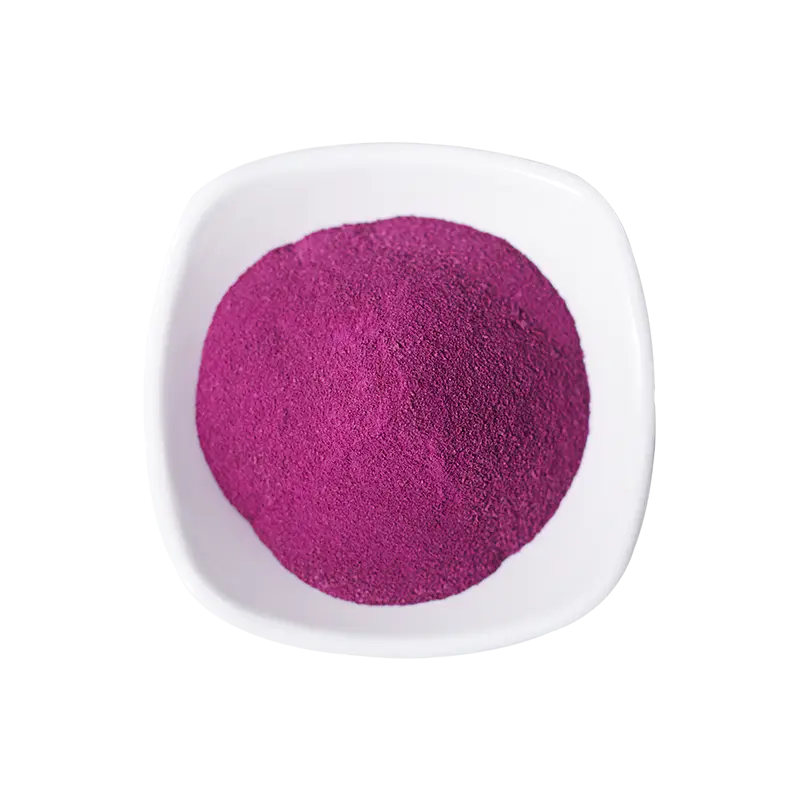
中文简体Purple potato powder is gaining attention not only for its nutritional profile but also for its strong natural coloring properties. Food manufacturers, chefs, and product developers are increasingly turning to this ingredient to enhance visual appeal while maintaining clean-label claims. Unlike synthetic dyes, purple potato powder provides a vibrant, stable color with added health benefits from anthocyanins and other antioxidants. This article explores practical applications, processing considerations, stability factors, and ways to integrate purple potato powder into diverse culinary and industrial contexts.
Content
- 1 Color stability: why purple potato powder outperforms other natural pigments
- 2 Application techniques for optimal visual impact
- 3 Comparative analysis: purple potato powder vs other natural colorants
- 4 Practical applications across food categories
- 5 Packaging, storage, and handling best practices
- 6 Conclusion: leveraging natural color with functional benefits
Color stability: why purple potato powder outperforms other natural pigments
Purple potato powder contains anthocyanins, water-soluble pigments responsible for the deep purple hue. These compounds are naturally resistant to oxidation and provide color stability across a range of pH levels and temperatures. Compared with other natural colorants such as beetroot or purple carrot powders, purple potato powder offers less fading during processing and storage, making it particularly suitable for baked goods, beverages, snacks, and powdered mixes.
Factors affecting pigment retention
Retention of color is influenced by drying methods, particle size, storage conditions, and exposure to light or moisture. Freeze-drying and low-temperature vacuum drying help preserve anthocyanins, while finely milled powders ensure uniform dispersion. Packaging with oxygen and light barriers is critical for maintaining vibrant color over extended periods.
Application techniques for optimal visual impact
Purple potato powder can be applied directly to doughs, batters, beverages, or sauces, or used as a rehydrated paste. For baked goods, blending the powder into flour or liquid ingredients ensures even color distribution. In beverages, dispersion in warm water or milk with gentle stirring enhances uniformity. The pigment also pairs well with fat-based formulations such as compound butters or pastry fillings, where it maintains vibrancy without altering texture.
Recommended usage ratios
Typical inclusion rates range from 0.5% to 5% by weight, depending on the product type and desired visual intensity. For beverages, 0.5–1% usually produces a noticeable but natural hue. Baked goods often require 2–4% to compensate for pigment dilution during mixing and baking. Adjustments should be guided by small-scale testing to achieve consistent appearance without impacting flavor or texture.
Comparative analysis: purple potato powder vs other natural colorants
|
Attribute |
Purple Potato Powder |
Beetroot Powder |
Purple Carrot Powder |
|
Color intensity |
High, deep purple |
Moderate, reddish-purple |
High, bluish-purple |
|
Heat stability |
Good, retains color in baking |
Moderate, fades slightly |
Good, slightly more sensitive to pH |
|
Shelf life |
12–36 months (dry storage) |
6–12 months |
12–24 months |
|
Flavor impact |
Mild, subtle earthy notes |
Distinctly sweet-earthy |
Moderate, slightly sweet |
Practical applications across food categories
Purple potato powder is versatile and can enhance both visual appeal and nutritional profile. In baked goods, it produces striking purple breads, muffins, and cookies. In snacks, it colors chips, crackers, and extruded products naturally. Smoothies, yogurt, and beverages benefit from its uniform dispersion and stable hue, while confectionery and icings take advantage of its gentle flavor and rich color. The powder also works in savory dishes such as mashed potatoes, gnocchi, or pasta for a visually appealing twist.
- Baked goods: breads, muffins, cookies, and cakes.
- Beverages: smoothies, milkshakes, yogurt drinks, and natural-colored juices.
- Snacks: chips, extruded snacks, crackers, and seasoning powders.
- Confectionery: icings, fillings, and candies requiring vibrant natural colors.
- Savory foods: pasta, gnocchi, mashed potatoes, and sauces.
Packaging, storage, and handling best practices
To maintain color vibrancy, purple potato powder should be stored in airtight, opaque packaging with low moisture content. Nitrogen-flushed or vacuum-sealed bags can further extend shelf life. Avoid exposure to high heat, humidity, or direct sunlight during storage and transport. Proper handling ensures uniform color distribution during production and reduces clumping in powdered blends.
Quality control and consistency checks
Quality control should include visual inspection for color uniformity, moisture content analysis to prevent caking, and batch-to-batch sensory checks. For large-scale production, small pilot tests in final product formulations help verify that the color intensity and stability meet specification requirements.
Conclusion: leveraging natural color with functional benefits
Purple potato powder offers a dual advantage: it provides vivid, stable color while delivering antioxidants and nutritional value. By selecting proper drying methods, maintaining controlled storage, and following application best practices, food manufacturers and culinary professionals can use this natural coloring solution to enhance visual appeal across a wide range of products while aligning with clean-label trends.
 Previous

 Xinqian Village (Dehydrated Fruit and Vegetable Industrial Park), Duotian Street, Xinghua City, Taizhou City, Jiangsu Province, China
 +86-13852647168
