

 English
 中文简体
中文简体Content
- 1 Anthocyanins as Key Functional Compounds in Purple Potato Powder
- 2 Anthocyanin Composition in Purple Potato Powder
- 3 Color Performance of Anthocyanins in Food Systems
- 4 Functional Roles Beyond Color
- 5 Processing Considerations for Anthocyanin Retention
- 6 Application Examples in Commercial Food Products
- 7 Role of Anthocyanins in Ingredient Differentiation
Anthocyanins as Key Functional Compounds in Purple Potato Powder
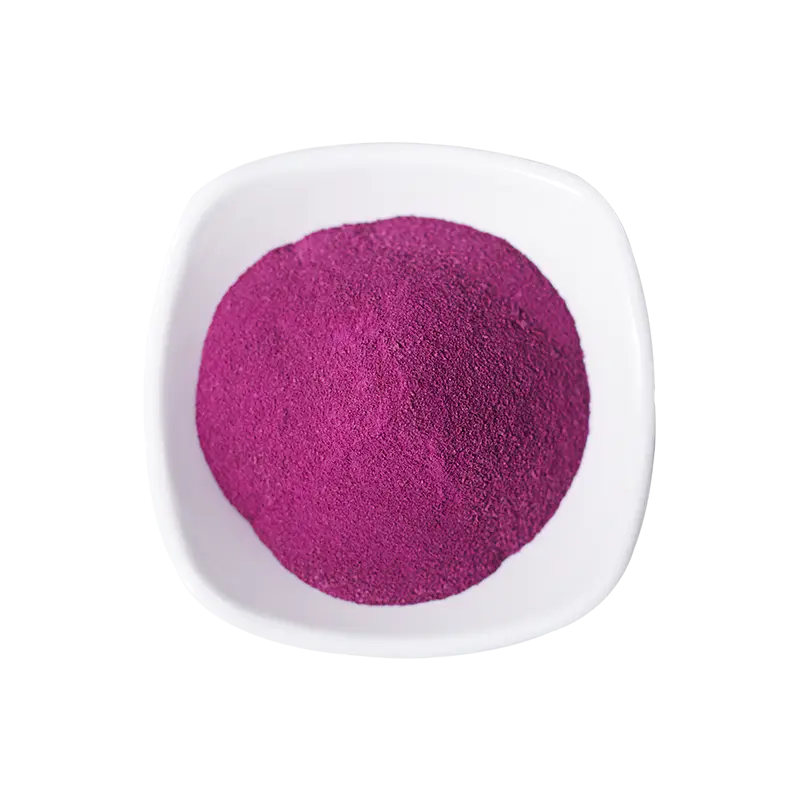
Anthocyanins are the primary bioactive pigments responsible for the distinctive purple color of purple potato powder. These water soluble flavonoid compounds are naturally present in purple potato tubers and remain partially retained after dehydration and milling. In food applications, anthocyanins are not only color contributors but also functional ingredients that influence formulation design, processing behavior, and final product positioning. Their presence gives purple potato powder a dual role as both a visual and functional component in modern food systems.
Anthocyanin Composition in Purple Potato Powder
Purple potato powder contains a complex profile of acylated anthocyanins, primarily derived from petunidin and peonidin glycosides. Compared with non acylated anthocyanins found in many fruits, these compounds exhibit improved stability under certain thermal and pH conditions. The specific anthocyanin composition depends on potato cultivar, growing conditions, and processing methods used during powder production.
Typical Anthocyanin Characteristics
- High proportion of acylated anthocyanins contributing to enhanced color stability
- Water solubility enabling uniform color dispersion in liquid and semi solid systems
- Natural association with potato starch and fiber matrices
Color Performance of Anthocyanins in Food Systems
In food applications, anthocyanins from purple potato powder provide hues ranging from violet to deep purple. Color expression is influenced by formulation pH, processing temperature, and interaction with other ingredients. Unlike synthetic dyes, the color intensity of anthocyanins may vary during processing, making formulation control a critical consideration.
pH Dependent Color Behavior
Anthocyanins exhibit different color states depending on pH. In mildly acidic environments, purple potato powder tends to show more stable and vivid purple tones. Neutral or alkaline systems may result in color shifting or fading, which must be addressed during product development.
|
pH Range |
Typical Color Appearance |
Application Consideration |
|
Acidic |
Deep purple to violet |
Suitable for beverages and fermented foods |
|
Neutral |
Muted purple |
Common in bakery and snack products |
Functional Roles Beyond Color
Anthocyanins in purple potato powder also contribute functional properties beyond visual appeal. They are commonly associated with antioxidant activity, which supports product positioning in functional and plant based food categories. While anthocyanins are not added for therapeutic claims, their presence aligns with consumer demand for naturally derived ingredients.
Formulation Advantages
- Supports clean label formulations by replacing synthetic colorants
- Compatible with starch based matrices such as noodles and extruded snacks
- Contributes to perceived nutritional value without additional additives
Processing Considerations for Anthocyanin Retention
The stability of anthocyanins during processing is a key concern when using purple potato powder. Drying methods, milling temperature, and storage conditions all influence pigment retention. Excessive heat or prolonged exposure to oxygen may lead to gradual color degradation.
Key Factors Affecting Stability
- Lower processing temperatures help preserve anthocyanin structure
- Controlled moisture levels reduce pigment loss during storage
- Light resistant packaging supports long term color stability
Application Examples in Commercial Food Products
Purple potato powder rich in anthocyanins is widely used in bakery items, noodles, snack pellets, and beverage mixes. In these applications, anthocyanins deliver a distinctive natural color while aligning with plant based and minimally processed product concepts. Food manufacturers often adjust dosage and formulation pH to achieve consistent visual results across batches.
Role of Anthocyanins in Ingredient Differentiation
Anthocyanins allow purple potato powder to stand apart from conventional potato ingredients. Their functional and visual characteristics enable product differentiation in competitive food categories. For brands focused on natural sourcing and ingredient transparency, anthocyanins contribute measurable value at both formulation and marketing levels without relying on artificial enhancements.
 Previous

 Xinqian Village (Dehydrated Fruit and Vegetable Industrial Park), Duotian Street, Xinghua City, Taizhou City, Jiangsu Province, China
 +86-13852647168
