

 English
 中文简体
中文简体Content
- 1 Functional Value of Purple Potato Powder in Baked and Dough Based Products
- 2 Application of Purple Potato Powder in Noodle Products
- 3 Use of Purple Potato Powder in Bread Formulations
- 4 Role of Purple Potato Powder in Pastry Products
- 5 Processing and Color Stability Considerations
- 6 Product Differentiation in Noodles Bread and Pastry Categories
Functional Value of Purple Potato Powder in Baked and Dough Based Products
Purple potato powder is increasingly used in noodles, bread, and pastry products due to its natural color, plant based origin, and compatibility with grain based formulations. Derived from dehydrated purple potatoes, the powder integrates into dough systems while contributing visual differentiation and ingredient transparency. Its application is not limited to appearance, as it also interacts with starch and moisture during processing, influencing dough handling and finished product texture.
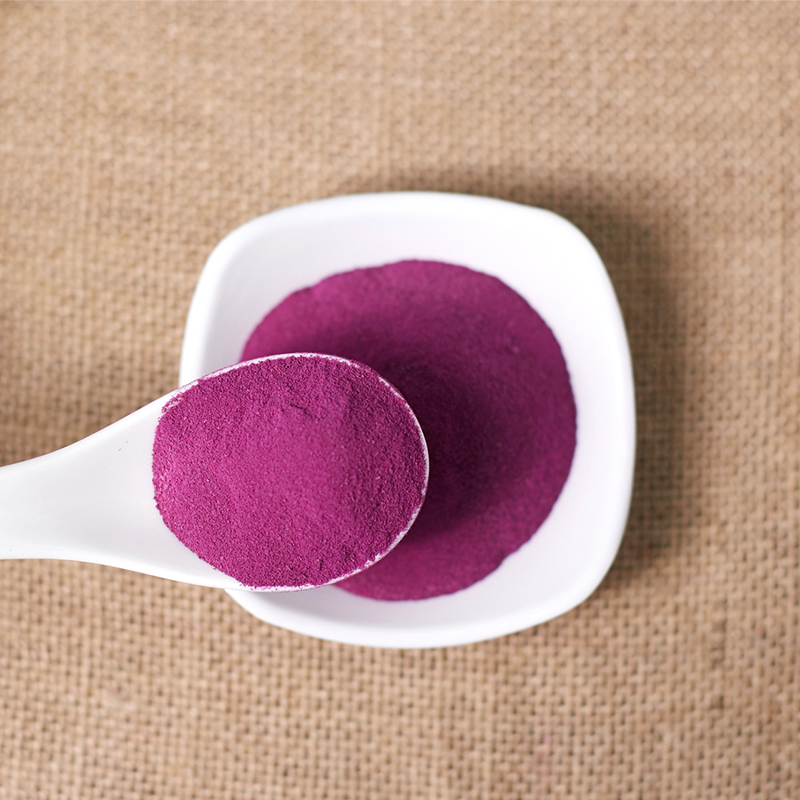
Application of Purple Potato Powder in Noodle Products
In noodle manufacturing, purple potato powder is commonly blended with wheat flour or other cereal flours to create colored fresh or dried noodles. The powder disperses evenly when properly hydrated, allowing consistent color distribution throughout the noodle strands. Its starch content aligns well with conventional noodle matrices, reducing formulation disruption.
Formulation Considerations for Noodles
- Controlled particle size supports smooth dough extrusion and sheet forming
- Water absorption should be adjusted to account for potato derived starch
- Gentle drying helps maintain purple color stability in dried noodles
Use of Purple Potato Powder in Bread Formulations
Bread products incorporate purple potato powder to achieve a distinctive crumb color and a visually appealing slice profile. The powder is typically added as a partial flour replacement, allowing bakers to maintain gluten network formation while introducing natural color and potato based solids. Yeast fermented systems can accommodate purple potato powder when dough hydration and mixing times are properly managed.
Impact on Dough and Crumb Structure
Purple potato powder influences dough softness and moisture retention due to its starch and fiber components. In bread applications, this can contribute to a softer crumb when balanced correctly. Overuse may weaken gluten strength, making precise formulation control essential for consistent loaf volume and texture.
|
Bread Type |
Primary Role of Purple Potato Powder |
Processing Focus |
|
Sandwich bread |
Uniform crumb color |
Balanced hydration and mixing |
|
Artisan loaf |
Visual differentiation |
Controlled fermentation time |
Role of Purple Potato Powder in Pastry Products
Pastry products such as buns, rolls, and laminated dough items use purple potato powder primarily for surface and internal color contrast. In low gluten pastry systems, the powder integrates smoothly without significantly altering dough extensibility. Its natural pigment provides a visual cue of ingredient differentiation in finished pastries.
Pastry Processing Advantages
- Supports layered or filled pastry designs with clear color definition
- Compatible with sweet and savory pastry formulations
- Maintains color through moderate baking temperatures
Processing and Color Stability Considerations
Thermal processing during baking and steaming affects the visual outcome of purple potato powder. While the natural pigments can tolerate standard baking temperatures, prolonged high heat may reduce color intensity. Manufacturers often adjust baking profiles or product thickness to preserve the intended appearance.
Product Differentiation in Noodles Bread and Pastry Categories
Purple potato powder allows noodle, bread, and pastry products to stand out in competitive bakery and staple food markets. Its application supports clean label positioning and plant based ingredient narratives while delivering consistent functional performance. When used with proper formulation control, it contributes measurable value across multiple dough based product categories.
 Previous

 Xinqian Village (Dehydrated Fruit and Vegetable Industrial Park), Duotian Street, Xinghua City, Taizhou City, Jiangsu Province, China
 +86-13852647168
