

 English
 中文简体
中文简体Flavor is the primary purchase driver in snack foods and ready meals — and spice powder is the ingredient category that delivers it most reliably at scale. Ground from dried spices and concentrated in both aroma and bioactive compounds, spice powder fits industrial food production in ways that fresh herbs and whole spices simply cannot match. The question for food manufacturers is not whether to use it, but how to source it with the consistency and specification control that large-volume production demands.
Content
Spice Powder's Growing Role in Processed Food Manufacturing
The global market for processed and convenience foods has expanded steadily, and spice powder sits at the center of that growth. Snack food product launches — from flavored chips and extruded snacks to popcorn coatings and nut seasonings — increasingly compete on flavor differentiation. Ready meal ranges are under pressure to deliver restaurant-quality taste profiles in formats that survive freezing, reheating, and extended shelf life. In both categories, spice powder is the workhorse ingredient making that possible.
Several structural trends reinforce this demand. Consumer interest in global flavor profiles — Korean gochugaru, Middle Eastern za'atar, Indian chaat masala — has moved from specialty retail into mainstream food service and packaged goods. Each of these profiles depends on precise spice powder blends applied at specific ratios. At the same time, clean label pressure is pushing manufacturers away from artificial flavor compounds toward natural spice-derived aromatics, which means spice powder is being asked to do more of the flavor-lifting that synthetic additives once handled.
The result is a category that is both higher volume and more technically demanding than it was a decade ago. Sourcing decisions that once turned on price alone now require attention to particle size, moisture content, color stability, microbial specifications, and batch-to-batch consistency.
Why Spice Powder Outperforms Fresh and Whole Spices in Industrial Use
The case for spice powder over fresh or whole spice formats in food manufacturing is straightforward, but each advantage matters in practice.
Concentrated, measurable flavor delivery. Drying and fine grinding concentrates the essential oils and bioactive compounds responsible for aroma and taste into a stable, uniform powder. A kilogram of garlic powder delivers equivalent flavor impact to several kilograms of fresh garlic, in a form that can be weighed precisely, metered automatically, and incorporated into dry blends without moisture management concerns.
Shelf life is the second major advantage. Whole spices retain their volatile oils longer than ground powder, but neither competes with the practical storage profile that well-packaged spice powder offers in a manufacturing environment. Properly dried and sealed spice powder maintains flavor potency and microbiological safety for 12 to 24 months under ambient conditions — eliminating the cold chain dependency and waste shrinkage that fresh herb sourcing introduces.
Batch consistency is the third, and often most commercially critical, factor. Food manufacturers producing millions of units per year cannot accept flavor variation between ingredient batches. Spice powder from a supplier with robust quality controls — standardized moisture limits, defined particle size ranges, and documented color specifications — enables the kind of recipe reproducibility that fresh material cannot provide. Explore the spice powder products for food manufacturing available for industrial supply.
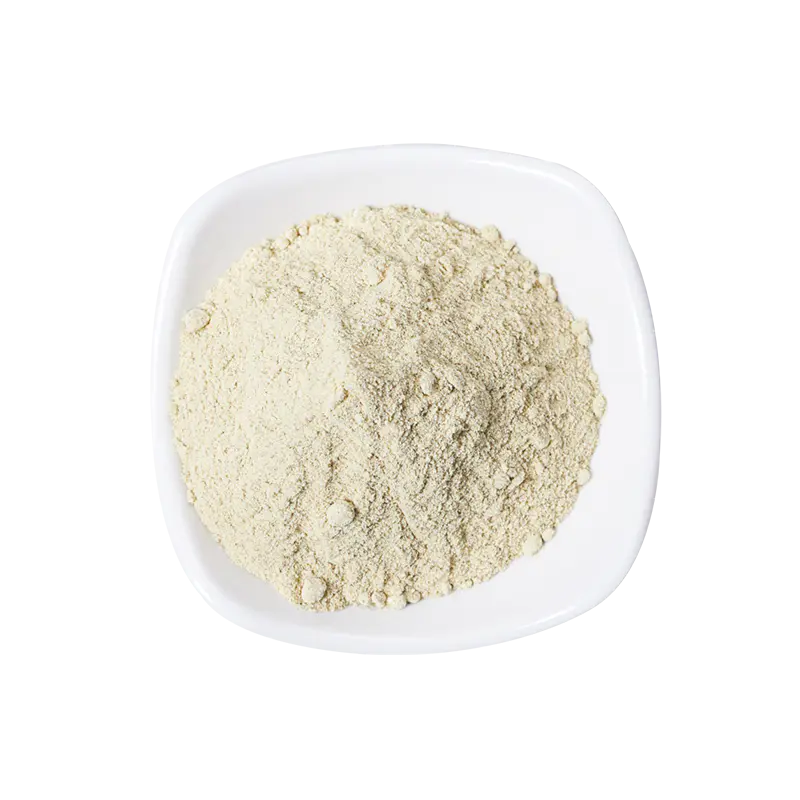
Snack Flavoring: What Food Manufacturers Need from Spice Powder
Snack food applications place specific technical demands on spice powder that differ from cooking or sauce applications. Understanding these requirements helps manufacturers specify the right material from the outset.
Particle size directly affects coating performance. Snack coatings — whether applied by drum tumbling, electrostatic coating, or slurry spray — require powder that adheres to the snack surface evenly and stays in place through packaging and handling. Powder that is too coarse clumps unevenly; powder that is too fine becomes airborne and fails to adhere. For most snack coating applications, a mesh size in the 40–80 range provides the balance of surface coverage and adhesion performance that manufacturers need.
Color stability is equally important. Paprika, turmeric, and chili powders are used as much for their visual impact as for flavor — a brightly colored snack signals flavor intensity to consumers. Spice powders with inconsistent color, whether from variable raw material quality or oxidation during storage, create visible batch-to-batch differences that affect product presentation. Suppliers who control raw material sourcing and storage conditions from harvest through delivery are the ones whose color specifications hold up across multiple orders.
For spice-seasoned snacks with clean label positioning, the sourcing of the powder itself becomes a label claim. A snack seasoned with "paprika powder" and "garlic powder" carries a label that consumers can read and recognize. The same flavor profile achieved with artificial flavor compounds carries a label that an increasing share of consumers actively avoids. Dehydrated vegetable powder for seasoning blends can extend spice-based flavor systems with additional natural complexity — onion, tomato, and celery powders are common co-ingredients in snack seasoning development.
Ready Meals and Condiments: Consistency at Scale
Ready meal applications present a different challenge profile from snack coatings. Here, spice powder is typically incorporated into wet or semi-wet matrices — sauces, gravies, marinades, spice pastes — where its behavior during cooking and reheating matters as much as its initial flavor contribution.
Solubility and dispersion are the primary technical concerns. A spice powder that disperses evenly in a sauce base during manufacturing but clumps or settles during freezing and reheating creates quality inconsistency in the finished product. Particle fineness and the absence of lumping — which can result from moisture uptake during processing — are therefore key specification parameters for ready meal applications.
Flavor stability through the full thermal cycle is the second critical requirement. Ready meals typically undergo a cook step during manufacturing, then freezing or chilling, then consumer reheating — sometimes twice. Volatile aromatics in spice powder are vulnerable to loss at each heat exposure. Suppliers whose raw materials retain higher essential oil content at the time of grinding produce powders that deliver more flavor through this thermal gauntlet. This is why sourcing from suppliers who process promptly after harvest and maintain controlled storage conditions — rather than holding aged raw material — matters for ready meal quality.
Condiment applications — spice-based sauces, rubs, and dry seasoning blends sold as finished products — add a regulatory dimension to spice powder sourcing. Finished condiments face microbiological limits set by food safety authorities in export markets, and the spice powder that goes into them is often the highest-risk ingredient for contamination. Suppliers with documented food safety management systems, regular third-party microbial testing, and traceable raw material sourcing reduce the compliance risk that condiment manufacturers carry.
For food brands developing new products across any of these categories, custom manufacturing and formulation services that combine spice powder with dehydrated vegetable ingredients allow full seasoning systems to be developed and supplied from a single source — simplifying procurement, reducing cross-contamination risk, and shortening the timeline from formulation to production approval.
 Previous

 Xinqian Village (Dehydrated Fruit and Vegetable Industrial Park), Duotian Street, Xinghua City, Taizhou City, Jiangsu Province, China
 +86-13852647168
