

 English
 中文简体
中文简体Content
- 1 The Short Answer: About 1/4 Teaspoon of Garlic Powder per Clove
- 2 Why Conversion Charts Do Not Always Agree
- 3 How to Swap Garlic Powder for Fresh Cloves in Real Cooking
- 4 What This Means for Commercial Kitchens and Food Manufacturers
- 5 Flakes, Granules, and Other Dried Garlic Forms
- 6 A Quick Reference for Everyday Cooking
The Short Answer: About 1/4 Teaspoon of Garlic Powder per Clove
One medium clove of fresh garlic is roughly equal to 1/4 teaspoon of garlic powder. If the powder is milled very fine, start with 1/8 teaspoon instead. If you are measuring coarser granulated garlic, 1/4 teaspoon is the more dependable amount. The conversion multiplies cleanly: two cloves become 1/2 teaspoon, four cloves become 1 teaspoon, and six cloves become 1 1/2 teaspoons.
The range between 1/8 and 1/4 teaspoon is not loose math. It reflects a real physical difference in the products sold under the name "garlic powder." Granulated garlic has particles closer to coarse salt, while garlic powder is ground into a fine dust that packs much more densely into the same spoon. A level spoonful of fine powder can deliver noticeably more garlic flavor than the same spoonful of granules.
The table below collects the conversions most commonly used in home and commercial kitchens. All amounts refer to one medium clove of fresh garlic, which generally weighs about 3 to 5 grams after peeling.
| Form | Equivalent to 1 medium clove |
|---|---|
| Fresh garlic, chopped | 1 teaspoon |
| Jarred minced garlic | 1/2 teaspoon |
| Dehydrated garlic flakes | 1/2 teaspoon, rehydrated in liquid |
| Granulated garlic | 1/4 teaspoon |
| Garlic powder, fine grind | 1/8 to 1/4 teaspoon |
| Garlic salt | 1/2 teaspoon, with less added salt |
Why Conversion Charts Do Not Always Agree
Search this question in several sources and you will see 1/4 teaspoon in some charts and 1/8 teaspoon in others. Both answers can be right, because three variables change the result: the grind size, the size of the clove, and the way you fill the spoon.
Granulated garlic and garlic powder are not the same grind
In commercial grading, granulated garlic is cut to particles roughly the size of salt crystals, while garlic powder is ground much finer. Fine particles fill the spaces between each other more completely, so a teaspoon of fine powder holds more garlic solids than a teaspoon of granules. This single difference explains why one chart says 1/4 teaspoon per clove and another says 1/8 teaspoon: they are describing two different products under the same name.
Clove size is not standardized
A "clove" is a variable unit, not a fixed measure. In a typical head of garlic, a peeled medium clove weighs 3 to 5 grams, but small inner cloves can be under 2 grams and plump outer cloves can weigh 6 grams or more. That is a threefold spread in raw material, so no single powder number can be exact for every clove. Treat 1/4 teaspoon as the average and taste before deciding whether you need more.
How you scoop changes the dose
Powder compresses easily. If you dip the spoon into the jar and shake off the excess, you get one dose; if you press the powder into the spoon, you can fit up to 50 percent more. Use a dry measuring spoon, fill it loosely, and level the top with a knife. A level teaspoon of garlic powder weighs about 3 grams, so 1/4 teaspoon is roughly 0.7 to 0.8 grams, a useful number when scaling a recipe or formula by weight.
How to Swap Garlic Powder for Fresh Cloves in Real Cooking
Powdered garlic is not simply fresh garlic with the water removed. Drying changes the flavor profile: fresh garlic is sharp, pungent, and slightly hot because crushing the raw bulb releases allicin compounds, while dried powders taste more mellow and savory. The right technique closes much of that gap.
Bloom it in warm oil, and stop before it colors
Heating garlic powder in oil for 20 to 30 seconds softens its raw note and spreads the aroma evenly through the dish. Do not let it brown; fine powder burns quickly and turns bitter. For dips, dressings, and marinades, skip the oil entirely because the powder dissolves readily in liquid.
Add it early in soups, later in stir-fries
In simmered sauces, soups, and braises, add the powder early so it hydrates and distributes evenly. In quick stir-fries and pan sauces, bloom it in the oil at the start or add it near the end; mixing dry powder with vegetables late can leave tiny unhydrated clumps.
Garlic salt is not the same ingredient
Garlic salt is a blend, typically about one part garlic powder to three parts salt. If you substitute garlic salt for plain powder, use more of it and cut the recipe's salt. A workable rule is 1/2 teaspoon of garlic salt per clove, with the added salt reduced by about 1/4 teaspoon to keep the seasoning balanced.
What This Means for Commercial Kitchens and Food Manufacturers
For a home cook, the difference between 1/8 and 1/4 teaspoon is fixed with a final taste. For a food manufacturer producing a garlic-flavored sauce in batches of 1,000 kilograms, the same gap is the difference between a batch that meets specification and one that gets rejected. This is why food plants do not calibrate dry recipes against fresh cloves. They specify dehydrated garlic products with controlled particle size, moisture content, and aroma strength, then lock the conversion into the formulation.
Our facility in Jiangsu, China, produces dehydrated garlic under ISO 22000 food safety management, with washing, slicing, drying, and milling steps designed to keep the density and flavor of each spoonful stable from batch to batch. That predictability makes a simple rule like "1/4 teaspoon of powder per clove" useful at production scale, and buyers can request a specific mesh size and moisture limit to match the application. This is why dehydrated garlic powder is preferred over fresh garlic in professional kitchens, and the same logic applies to most processed foods. Where consistency matters more than fresh pungency, our food-grade dehydrated garlic powder gives you a measurable, reproducible garlic intensity.
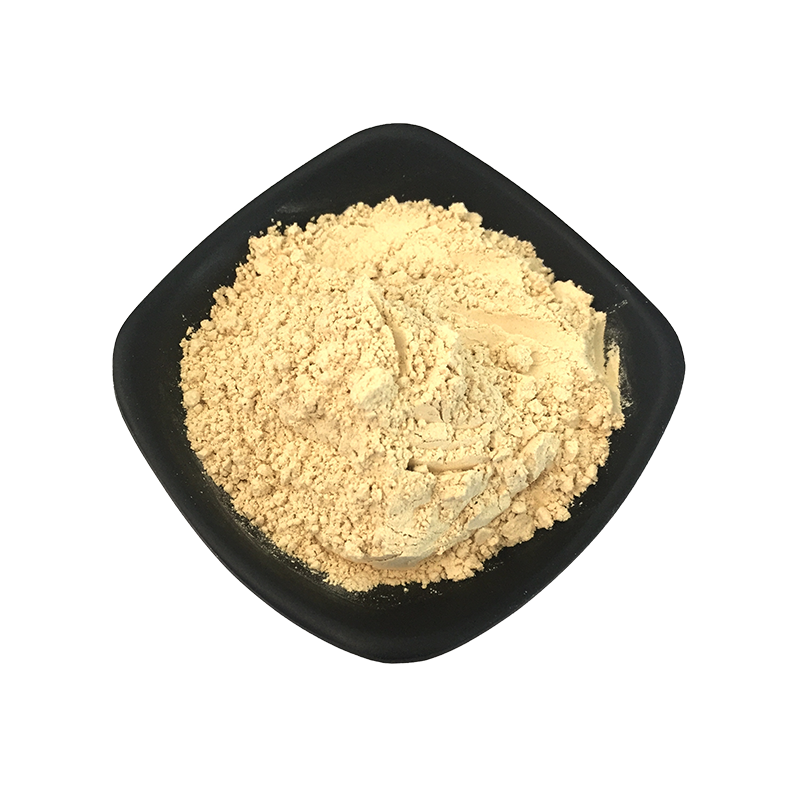 Dehydrated garlic powders Manufacturers, Dried garlic powders Suppliers, FactoryAs China Wholesale Dried garlic powders Manufacturers and Bulk Dehydrated garlic powders Suppliers and Dehydrated garlic powder Factory, ...View Product →
Flakes, Granules, and Other Dried Garlic Forms
Powder is the right format when garlic should disappear into the dish. When you want visible pieces, use dehydrated flakes or granules instead.
- Dehydrated garlic flakes: about 1/2 teaspoon per clove. Soak in warm water, broth, or the recipe's own liquid for about 10 minutes before adding.
- Granulated garlic: 1/4 teaspoon per clove. It hydrates quickly and works in almost any cooked dish.
- Dried minced garlic: between flakes and powder in texture; start with about 1/4 teaspoon per clove and let it hydrate in the liquid portion of the recipe.
Flakes add texture and a slightly less concentrated taste because they retain more of the plant's structure. They suit rubs, breads, and visibly garlicky stir-fries. For anyone who wants a consistent form between whole pieces and powder, our dehydrated garlic flakes and pieces keep the conversion straightforward: rehydrate, measure, and treat the result like chopped fresh garlic. If you are new to dried garlic, the dehydrated garlic uses, benefits, and handling tips page covers rehydration times and dosage in more detail.
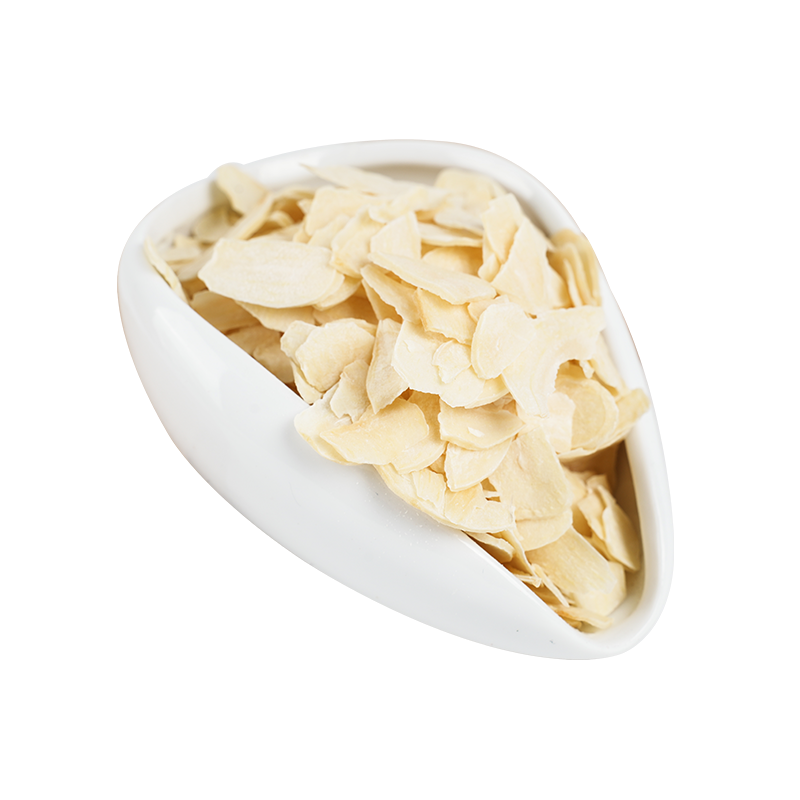 Dehydrated garlic Manufacturers, Dried garlic Suppliers, Factory - Xinghua VegetAs China Wholesale Dried garlic Manufacturers and Bulk Dehydrated garlic Suppliers and Dehydrated garlic Factory, Xinghua Vegetable Foods...View Product →
A Quick Reference for Everyday Cooking
- 1 small clove: about 1/8 teaspoon of fine garlic powder
- 1 medium clove: about 1/4 teaspoon of garlic powder or granulated garlic
- 1 large clove: about 1/3 to 1/2 teaspoon of garlic powder
- Garlic flakes: 1/2 teaspoon per clove, rehydrated before cooking
- Garlic salt: 1/2 teaspoon per clove, with added salt reduced
Garlic powder keeps its strength for a long time, but it fades with air, heat, light, and moisture. Store it in a sealed container in a cool, dark cabinet and always use a dry spoon. Powder that smells weak will deliver weak flavor, so increase the amount as needed. For more detail, see our guide on proper storage of dehydrated vegetables and powders.
The practical answer to "how much garlic powder equals 1 clove" is simple: start with 1/4 teaspoon, let the dish cook long enough to release the flavor, then taste and adjust. Taste buds vary and cloves vary, but a controlled batch of dehydrated garlic is the same strength every time, and that is the closest thing to a guaranteed conversion in any kitchen.


 Xinqian Village (Dehydrated Fruit and Vegetable Industrial Park), Duotian Street, Xinghua City, Taizhou City, Jiangsu Province, China
 +86-13852647168
