

 English
 中文简体
If a recipe calls for chives and the only thing in the fridge is a bunch of scallions, dinner will still come together, but it will not taste the same. Chives and scallions are not the same plant. They share a genus, Allium, and both grow hollow green leaves with a mild onion flavor, which is exactly why the two get swapped in kitchens, in recipes, and even in product specifications. But they are different species, with different leaf structure, different aroma chemistry, and very different behavior once heat is applied.
The short answer: chives (Allium schoenoprasum) are thin, tender, and delicate, and they are at their best raw or added in the final seconds of cooking. Scallions, sold as green onions or spring onions, are usually Allium fistulosum and sometimes a young Allium cepa. They are thicker, carry a distinct white shank, and deliver a much stronger onion bite that survives a hot pan. Treating them as interchangeable changes flavor intensity, texture, and often cost.
For a home cook, that is a matter of taste. For a food manufacturer, an importer, or anyone buying ingredients by the kilogram, it is a specification issue: chives and scallions are declared separately on an ingredient statement, they are dried and priced differently, and they do not rehydrate or perform the same way in a formulation.
Content
- 1 Are Chives and Scallions the Same? The Difference at a Glance
- 2 Same Family, Different Species: Why the Confusion Exists
- 3 Flavor Chemistry and What Heat Does to Each
- 4 Nutrition: Similar Calories, Different Micronutrient Balance
- 5 Substituting One for the Other Without Ruining the Dish
- 6 What Changes When These Are Bought in Bulk
Are Chives and Scallions the Same? The Difference at a Glance
| Feature | Chives | Scallions (green onions) |
|---|---|---|
| Botanical name | Allium schoenoprasum | Allium fistulosum, or young Allium cepa |
| Leaf width | Hollow and tubular, roughly 2 to 3 mm | Hollow and tubular, roughly 5 to 10 mm |
| Color | Even deep green from base to tip | White shank, then pale green, then dark green |
| Base | Small slender bulbs in dense clumps | Elongated white shank, little or no bulb |
| Flavor | Mild and sweet, with a faint garlic note | Sharper and more pungent, strongest in the white part |
| Response to heat | Aroma fades quickly when cooked | Holds up in stir-fries, soups, and on the grill |
| Typical use | Garnish, dips, eggs, cold dishes, vinaigrettes | Aromatic base, stir-fries, soups, salads, pancakes |
| Flowers | Edible pink-purple blossoms | Large white-green umbels, rarely eaten |
Two rows in that table do most of the work. First, chives have no real white shank, so if the bunch has a thick, pale base, you are holding scallions. Second, chive leaves are so thin that slicing them lengthwise is impractical, while scallion leaves are wide enough to split into ribbons.
Same Family, Different Species: Why the Confusion Exists
Chives and scallions both belong to the genus Allium, the same group that contains garlic, leeks, and bulb onions. All of them build flavor from sulfur-based compounds, and all of them produce hollow, tube-shaped leaves. That shared blueprint is why they look alike on a cutting board and why the flavor directions are similar, even if the intensity is not.
The plants themselves differ in how they grow. Chives are a hardy perennial that forms dense clumps from small, slender bulbs, typically reaching 15 to 30 cm, and they regrow after each cut. Scallions are usually grown as an annual or biennial crop, harvested whole, reaching 30 to 60 cm, with the root trimmed and the white shank intact. A chive plant left to flower produces small pink-purple pom-poms that are edible and often used as a garnish; a scallion left to flower produces a large spherical umbel that most cooks discard.
Retail naming adds another layer of confusion. In many markets, "green onion" and "scallion" are used interchangeably, and the same bin may contain bunching onions that never form a bulb or young bulb onions pulled early. In the United Kingdom, "spring onion" can mean either. Chives, however, are never a bulb onion in disguise. Whatever the label says, if the product forms a distinct white shank longer than an inch or two, it is a scallion type, not a chive.
Flavor Chemistry and What Heat Does to Each
Chives are prized for their low pungency. Their sulfur compounds are mostly alkyl sulfoxides that convert into milder thiosulfinates when the cells are cut, which is why raw chives taste gently onion-like with a whisper of garlic. That aroma is volatile. A ten-minute simmer will flatten it almost completely, so chives belong on top of a baked potato or stirred into sour cream, not into a stock pot.
Scallions carry more of the sharper precursors, concentrated in the white shank. Cutting the white part releases the compounds that make your eyes water slightly; cooking softens that harshness and, in a hot pan, converts some of it into sweetness as the sugars brown. This is why scallion whites go in first as an aromatic and the green tops go in last for color and freshness.
If you need to swap them, match the job rather than the name:
- For a cold dish or a garnish, chives are the better choice because their flavor stays clean and they will not overpower the other ingredients.
- For anything that spends more than a minute in a hot pan, scallions win, since chives would simply disappear.
- When a dish needs onion depth rather than a green top note, neither one is a substitute for a mature bulb onion.
Nutrition: Similar Calories, Different Micronutrient Balance
| Nutrient (per 100 g raw) | Chives | Scallions |
|---|---|---|
| Energy | ~30 kcal | ~32 kcal |
| Water | ~90% | ~90% |
| Vitamin A (RAE) | ~218 µg | ~50 µg |
| Vitamin C | ~58 mg | ~19 mg |
| Vitamin K | ~213 µg | ~207 µg |
| Folate | ~105 µg | ~64 µg |
| Calcium | ~92 mg | ~72 mg |
Both are low-calorie, mostly water, and both are meaningful sources of vitamin K. Chives pull ahead on vitamin A, vitamin C, folate, and calcium on a fresh-weight basis. The practical takeaway is not that one is healthier, but that they are not nutritionally identical: a formulation that specifies chives for its vitamin A contribution will not get the same result from an equal weight of scallions.
Substituting One for the Other Without Ruining the Dish
- Cold or barely cooked dishes: use chives. Their flavor is stable when raw and their texture is tender enough to eat uncooked in quantity.
- Hot dishes that need an onion backbone: use scallions. Add the sliced white shank early and the green tops in the last thirty seconds.
- Replacing scallion greens with chives: use two to three times the volume, and chop finely so the pieces distribute evenly.
- Replacing the white shank with chives: do not. The white part carries the pungency and the body that chives cannot provide.
- Replacing chives with scallions as a garnish: use only the tender dark-green tops, chop them smaller than usual, and start with half the stated quantity, because the flavor is noticeably sharper.
- Anything that simmers for more than a few minutes: neither should be added early, and chives should be treated as a finishing ingredient only.
What Changes When These Are Bought in Bulk
Once the discussion moves from a bunch of herbs to a purchase order, the two become separate line items. Dehydrated chives are sold as cut or freeze-dried pieces, while scallion types are traded as dried green onion or spring onion flakes. They differ in cut size, color, aroma strength, and rehydration behavior, so a spec written for one will not describe the other.
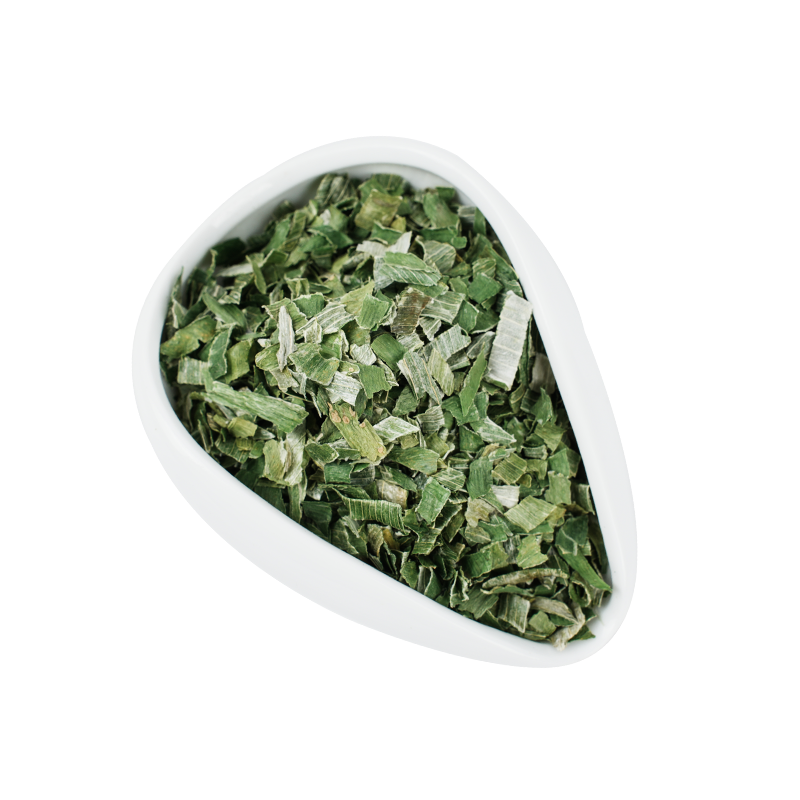 Dehydrated Chives for Cut Size and Aroma ReviewDehydrated chives in cut or freeze-dried pieces; review cut size, color, aroma, moisture, and residue specifications before purchase.View Product →
Buyers evaluating dried chives typically check cut length, moisture content, color retention, aroma, microbiological limits, and pesticide residue compliance against the destination market's maximum residue levels. Freeze-drying preserves the delicate chive aroma far better than hot-air drying, which is why the two processing routes are priced and specified separately. Chives also tend to cost more per kilogram than dried green onion, because thin leaves give a lower usable dry-matter yield, so swapping one for the other to cut cost quietly changes both flavor strength and the ingredient declaration.
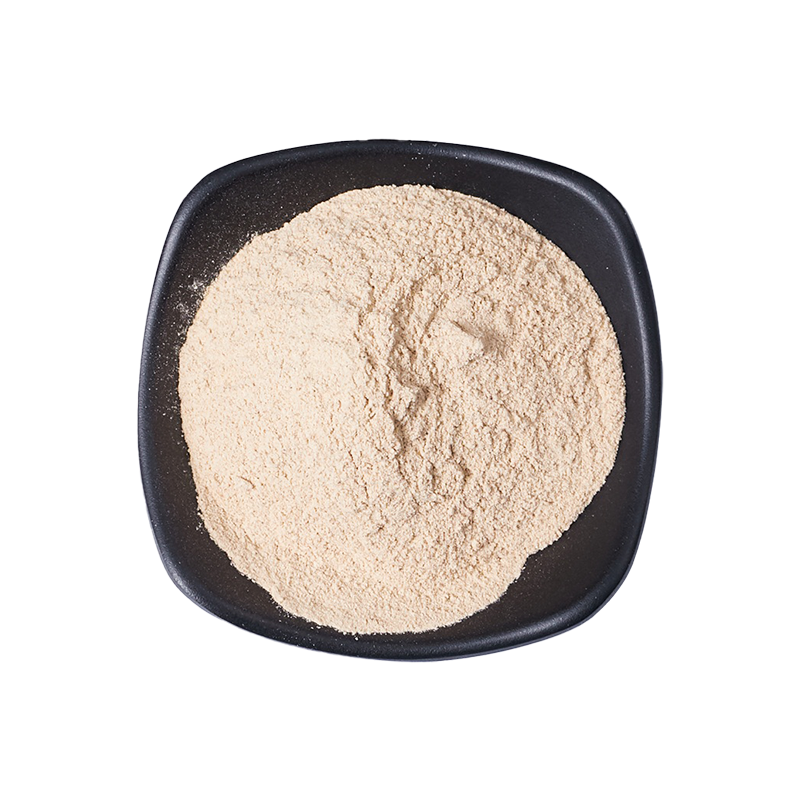 Dehydrated Onion Powder for Formulation and SeasoningDehydrated onion powder offers a stronger allium base for snack foods, seasonings, and ready meals when chives are not enough.View Product →
When a formulation needs a stronger allium backbone than chives can deliver, formulators usually move to an onion or garlic powder rather than overloading the recipe with chives. That substitution is a formulation decision, not a garnish decision. For a closer look at how the dried form performs against the fresh herb, this comparison of dried chives and fresh chives in flavor stability and cost covers the trade-offs in more detail.
So no, chives and scallions are not the same. They sit in the same genus and share a hollow green leaf and a mild onion direction, but they are different species with different structure, pungency, and heat tolerance. The white shank is your fastest field test, and heat tolerance is your fastest kitchen test: chives for the finish, scallions for the cooking.
For buyers, the distinction matters even more, because the two are labelled, dried, and priced as separate ingredients, and a specification that treats them as equals will eventually show up as an off-flavor, a color problem, or a labelling question. Decide which one the product actually needs, then specify it precisely.


 Xinqian Village (Dehydrated Fruit and Vegetable Industrial Park), Duotian Street, Xinghua City, Taizhou City, Jiangsu Province, China
 +86-13852647168

