

 English
 中文简体
If a recipe calls for a tablespoon of freshly grated ginger and the root in your fridge has gone rubbery, a scant three-quarters of a teaspoon of ground ginger will cover it. That number is not folklore. It falls straight out of how much water fresh ginger carries and how much weight disappears once that water is gone.
The working figures are stable across culinary charts and supplier specifications: one teaspoon of freshly grated ginger, about 2.5 g, equals roughly a quarter teaspoon of ground ginger, about 0.5 g. On a weight basis, expect 5 to 6 kg of peeled fresh root to yield 1 kg of dried ginger, because fresh ginger is around 80 percent water. A 100 g piece of root, peeled and sliced, becomes 18 to 22 g of dried slices, or 15 to 18 g of powder after milling losses and sieve residue are counted.
The process itself is short: peel or don't, slice thin and even, dry until the pieces snap, cool completely, then grind. Almost every failed batch traces back to one of those details rather than to the method itself.
Content
- 1 Conversion numbers you can cook from
- 2 Why fresh ginger loses most of its weight
- 3 Drying at home: dehydrator, oven, or air
- 4 Grinding dried ginger into powder
- 5 What changes at commercial scale
- 6 Why dried ginger tastes hotter and less bright
- 7 Storage: keeping the heat and aroma in
- 8 Buying dried ginger powder: specs worth asking about
Conversion numbers you can cook from
Volume substitutions are for cooking. Weight ratios are for planning a drying batch. Mixing the two is how people end up with either a bland dish or a jar of powder that cost more than expected.
| Fresh ginger | Dried or powdered equivalent | When to use it |
|---|---|---|
| 1 tsp freshly grated (about 2.5 g) | 1/4 tsp ground ginger (about 0.5 g) | Standard swap in cooked dishes, spice blends, and baking |
| 1 tbsp freshly grated (about 6 g) | 3/4 tsp ground ginger | Marinades, braises, and gingerbread-type batters |
| 1 inch knob (10 to 12 g) | 1.5 to 2 tsp dried slices, or 1/2 tsp ground | Slices for tea or stock; powder for direct mixing |
| 100 g peeled root | 18 to 22 g dried slices, 15 to 18 g powder | Batch planning and yield checks |
Why fresh ginger loses most of its weight
Fresh ginger sits at roughly 78 to 82 percent moisture. What remains is starch, fiber, oleoresin, and a small but decisive fraction of volatile oil, usually cited at 1 to 3 percent of fresh weight. Drying removes water and almost nothing else, so the solids you started with are the powder you finish with, minus whatever peeling and sieving throw away.
Peeling is the first hidden loss. Removing the skin takes 10 to 15 percent of the root, and with it a good share of the fibrous, slightly earthy character that shows up more strongly once the water is gone. Unpeeled slices are perfectly serviceable for tea or stock, but if you want a pale, mild powder for baking, peel first.
Slice thickness is the second variable. A 2 mm slice dries evenly in a few hours. A 6 mm slice can look dry on the surface while the center stays soft, a condition that later turns into mold in the jar. Commercial lines usually dice to a fixed spec for exactly this reason: uniform geometry means uniform moisture, and uniform moisture means a predictable water activity below 0.6.
Drying at home: dehydrator, oven, or air
A countertop dehydrator gives the most control, but a convection oven on its lowest setting works if you keep an eye on it. Ambient air drying is realistic only in a genuinely dry climate.
- Wash and scrub the root, then peel it if you want a light-colored, milder powder.
- Slice 2 to 3 mm thick, ideally on a mandoline, and discard any pieces that are noticeably thicker.
- Dehydrator: run at 45 to 55 °C for 6 to 10 hours. Lower temperatures preserve more of the bright volatile oils; higher temperatures finish faster and push the flavor toward a warmer, sharper profile.
- Oven: set to its lowest setting, around 60 °C, prop the door open slightly, and use convection if available. Expect 3 to 5 hours, with the trays rotated halfway through.
- Air drying: only where relative humidity stays under 40 percent. Two to four days is typical, and direct sun will fade the color noticeably.
- Test for doneness by snapping a piece. It should break with a clean crack and show no flexible center. A 100 g batch should weigh about 20 g at that point.
- Cool the slices for at least 30 minutes before grinding. Warm slices steam inside the grinder and the powder clumps.
Grinding dried ginger into powder
A blade grinder handles small batches well if you pulse in 10 to 15 second bursts rather than running it continuously, since friction heat drives off the aromatics you just spent hours preserving. Sift the result through a fine sieve, return the coarse fraction for another pulse, and repeat until the residue is minimal.
Industrial milling uses hammer or pin mills with cooling or a fast single pass. Particle size is a specification, not an accident: 60 to 80 mesh is common for food manufacturing because it disperses quickly and blends evenly, while 40 mesh suits tea bags and applications where a slower release is wanted. Finer powder releases flavor faster but cakes more readily and generates more dust during handling.
What changes at commercial scale
The chemistry does not change with scale. Control does. A factory line can hold temperature and airflow steady for hours, measure moisture inline, and reject any lot that falls outside spec, which is why export-grade ginger powder is far more consistent than a home batch ground from a single root.
| Parameter | Home dehydration | Commercial dehydration |
|---|---|---|
| Equipment | Tray dehydrator or domestic oven | Multi-stage band or conveyor dryer with controlled airflow |
| Temperature | 45 to 60 °C | 55 to 70 °C, often staged across zones |
| Time | 6 to 12 hours | 4 to 8 hours |
| Batch size | 0.5 to 2 kg | Hundreds of kilograms per hour |
| Pre-treatment | Hand peeling and slicing | Mechanical washing, peeling, dicing to spec, optional steam treatment for microbial control |
| Endpoint control | Snap test and spot weighing | Inline moisture measurement, target at or below 10 percent moisture and 0.6 water activity |
| Post-drying | Cool, grind, sift, jar | Cooling, metal detection, milling, sieving, lot sampling for volatile oil and microbiology |
Most buyers never dry ginger themselves, and that is a reasonable choice when the volume is large. A supplier with an established dehydration line can deliver a fixed mesh, a documented moisture range, and a certificate of analysis per lot, which is difficult to match with a kitchen-scale operation.
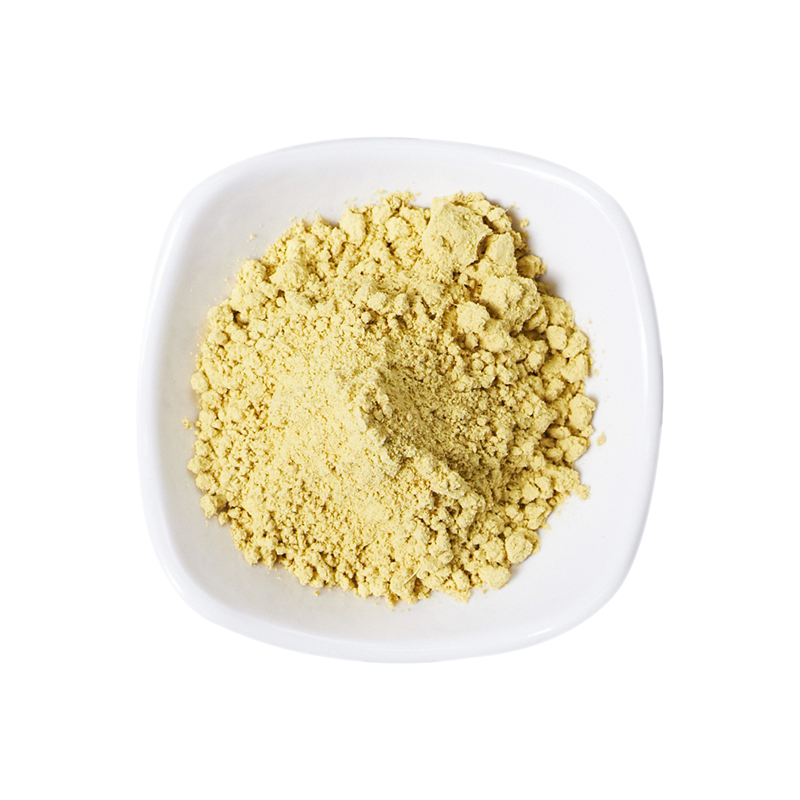 Dehydrated Ginger Powder with Documented Supplier SpecificationsFinely ground dried ginger root for warm, sweet-spicy depth in soups, sauces, teas, and marinades, supported by supplier lot documentation.View Product →
Why dried ginger tastes hotter and less bright
Fresh ginger gets its bite from gingerol. Heat converts gingerol into shogaol, which is more pungent and finishes sweeter and warmer. That conversion is exactly what drying does, so a dried product is not simply a weaker version of the fresh root. It is a different ingredient with a deeper, less citrussy character.
The practical rule follows from that. Use dried ginger where it will simmer, bake, or sit in a marinade: spice blends, gingerbread, sausages, braises, chai, and long-cooked curries. Keep fresh ginger for the end of cooking, where the bright top notes survive, such as stir-fries, dressings, and steamed dishes. When substituting, start at one quarter of the fresh volume and adjust upward, because the dried form reads stronger on the palate even at a smaller dose.
Storage: keeping the heat and aroma in
Dried slices hold their quality for 18 to 24 months in an airtight container kept dark at 15 to 20 °C. Powder is less forgiving: 6 to 12 months is the realistic window for full aroma, because every time the jar opens, oxygen and humidity get a turn at the volatile oils.
Skip the refrigerator unless the container is vacuum sealed. Temperature swings cause condensation inside the jar, and that moisture is what turns a free-flowing powder into a solid block. A silica gel packet helps in humid kitchens. If the powder has clumped or smells flat rather than sharp, it has already lost the qualities you paid for. For a broader look at moisture control and packaging choices, the guidance on storing dehydrated vegetables properly covers the same principles at greater depth.
For more on keeping dried products in condition, see how to store dehydrated vegetables properly.
Buying dried ginger powder: specs worth asking about
If the goal is a repeatable result across hundreds of kilograms rather than one jar, the specification sheet matters more than the drying method. These are the parameters that separate a food-grade ingredient from a generic powder:
- Moisture at or below 10 percent, with 6 to 8 percent typical for export grade
- Water activity at or below 0.6 to prevent mold and yeast growth in storage
- Mesh size declared, usually 60 to 80 for blending applications
- Volatile oil content stated, since it drives perceived heat and aroma
- Sulfur dioxide free, or a declared maximum where regulations allow it
- Steam sterilization instead of ethylene oxide treatment
- Pesticide residues tested against EU, US, or Japanese maximum limits
- Heavy metals and microbiology reports, including absence of Salmonella
- Traceability to the farm lot, plus ISO 22000, HACCP, or organic certification where required
Ask for a certificate of analysis for the specific lot being shipped, not a generic sample report. Color should be a light cream to tan; a dull or brownish tone usually signals overheating during drying or prolonged storage.
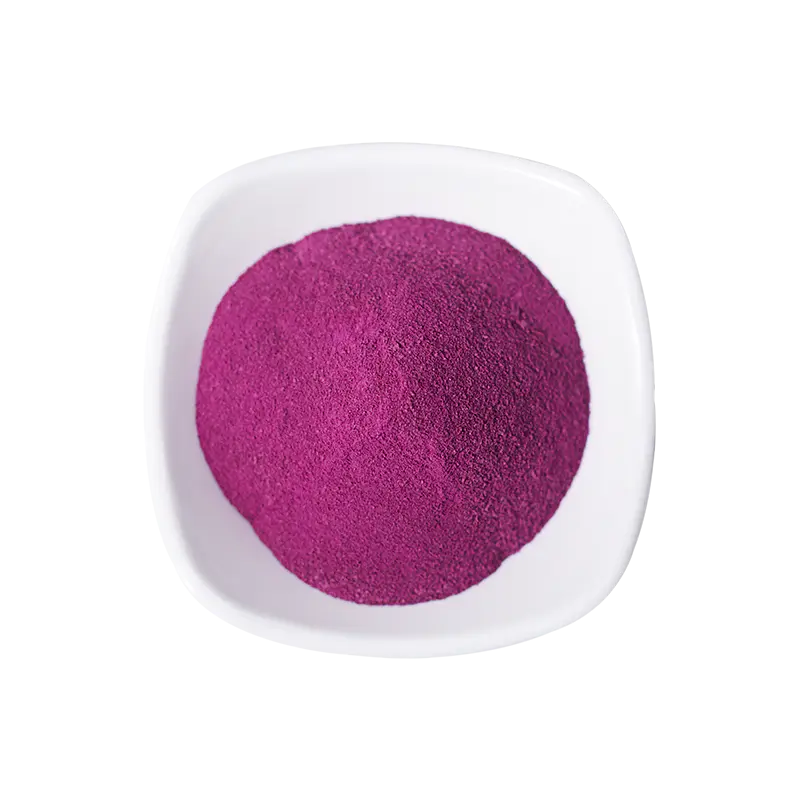 Dehydrated Vegetable Powders for Formulation and ColorA range of ground vegetable and seasoning powders, useful for checking yield, color, and specifications before committing to a larger batch.View Product →
Before committing to a large batch of fresh root, dry 100 g and weigh the result. That single number tells you your real yield, your true cost per kilogram of powder, and whether your drying setup is consistent enough to be repeated. Everything else in this process is adjustment around that baseline.


 Xinqian Village (Dehydrated Fruit and Vegetable Industrial Park), Duotian Street, Xinghua City, Taizhou City, Jiangsu Province, China
 +86-13852647168

