

 English
 中文简体
A soup manufacturer receives two chive samples on the same day. One is freeze-dried and bright green; the other is air-dried and olive. Both smell like chives, but one will fade in a 20-minute boil while the other holds color in a dry seasoning blend. That is the daily reality of buying cooking herbs: the herb name on the purchase order is only the start. Form, cut, moisture, and handling determine what the consumer actually tastes.
The practical conclusion is simple: choose the herb form after you define the job. Fresh herbs suit garnish, short-cook dishes, and foodservice prep. Dried leaf and flake suit soups, sauces, snacks, and blends where visible pieces matter. Powders suit uniform dispersion, low-dose flavor, and dry mixes. Price per kilo is not a useful comparison until you account for water content, flavor strength, and waste.
Content
- 1 Fresh, dried, and powdered: same herb, different economics
- 2 Culinary herbs behave differently in heat, water, and fat
- 3 What to specify when buying cooking herbs
- 4 Match the form to the application
- 5 Storage and handling decide the last 20% of quality
- 6 Supplier questions that reveal more than a brochure
- 7 A practical buying decision
Fresh, dried, and powdered: same herb, different economics
Cooking herbs are mostly water when fresh. That water adds weight, shortens shelf life, and makes fresh herbs expensive to ship and store. Drying removes most of that water, concentrating flavor and color compounds by weight, but it also creates a new set of risks: volatile aroma loss, browning, and moisture pickup during storage. Powdering goes further. It improves dispersion and reduces visible pieces, but the greater surface area makes powders more hygroscopic and more sensitive to aroma loss.
| Form | Typical water level | Flavor and aroma behavior | Visual effect | Storage profile | Best fit |
|---|---|---|---|---|---|
| Fresh | High, often 70-90% | Bright top notes; changes quickly with heat | Fresh color and texture | Days under refrigeration | Garnish, short-cook dishes, foodservice prep |
| Dried leaf or flake | Low | Concentrated but volatile; needs hydration | Visible pieces; color is usually duller | Months in sealed, cool, dry storage | Soups, sauces, snacks, visible herb blends |
| Powder | Very low | Fast dispersion; aroma can fade from surface area | Little visible identity; colors liquids and dry mixes | Months; hygroscopic and prone to caking | Seasoning blends, dry mixes, sauces, baked goods |
The table explains why a buyer should not compare fresh, dried, and powdered cooking herbs on price alone. A dried flake may look cheaper per kilo than a powder, but a powder can deliver more uniform flavor in a dry rub. A fresh herb may cost more at delivery, but it may be the only form that gives the right finish to a chilled salad or a plated dish.
Culinary herbs behave differently in heat, water, and fat
Delicate herbs such as basil, chives, cilantro, parsley, and dill carry bright, volatile notes. Those notes are easily lost in long cooking. They are better added late, infused into oil at low temperature, or used in cold and short-cook applications. Robust herbs such as thyme, oregano, rosemary, and sage have woody structures and stronger resins. They tolerate simmering and are often better suited to stocks, braises, marinades, and savory blends.
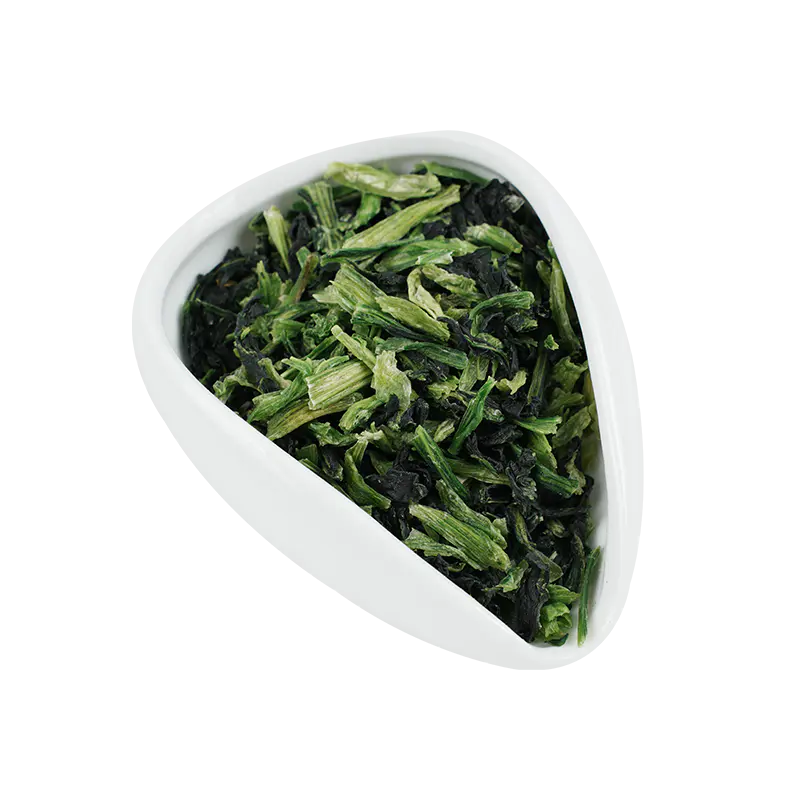
Chives illustrate the point well. In a chilled potato salad or a cream cheese blend, dried chives need a short hydration step to avoid a hard, papery bite. In a dry soup mix, the same chives may be the only green visual cue, so cut size and color matter as much as flavor. A supplier that controls blanching, drying temperature, and final moisture can preserve more of the green note and reduce the dull, hay-like character that comes from poor handling.
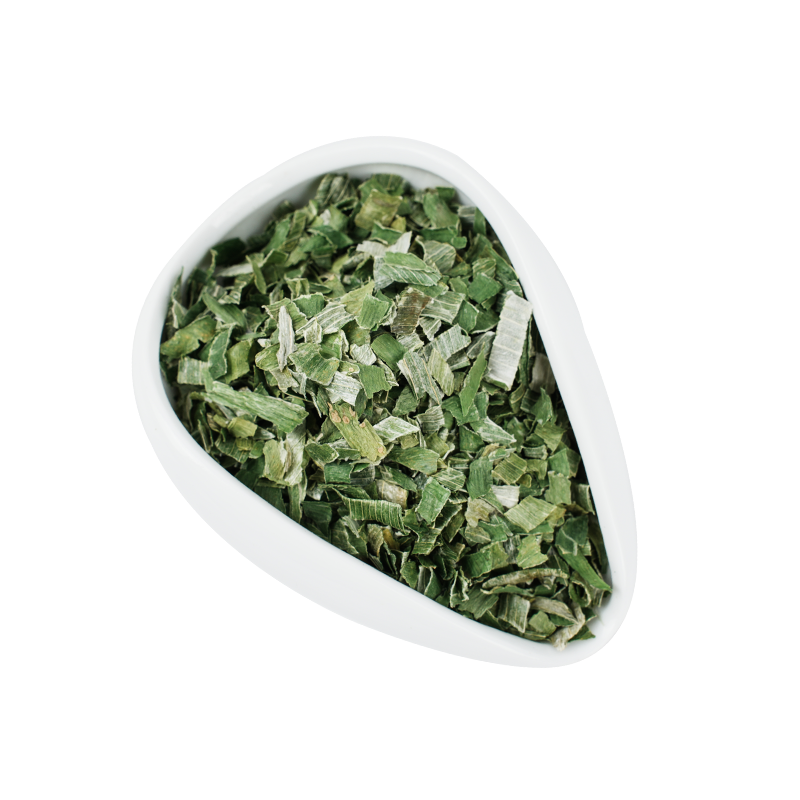 Dehydrated Chives for Soups, Dips, and Bulk SupplyShelf-stable chopped chives retain mild onion flavor and green color for soups, dips, salads, and bulk food manufacturing.View Product →
Coriander is another split case. The leaf is used for fresh, citrus-like top notes, while the seed is used for warm, spicy base notes. Dried coriander leaf can work in curries, stews, and snack seasonings, but it loses aroma quickly if exposed to light and air. Buyers should specify whether they need leaf, seed, or a blend, and should ask for a cut size that survives the intended process.
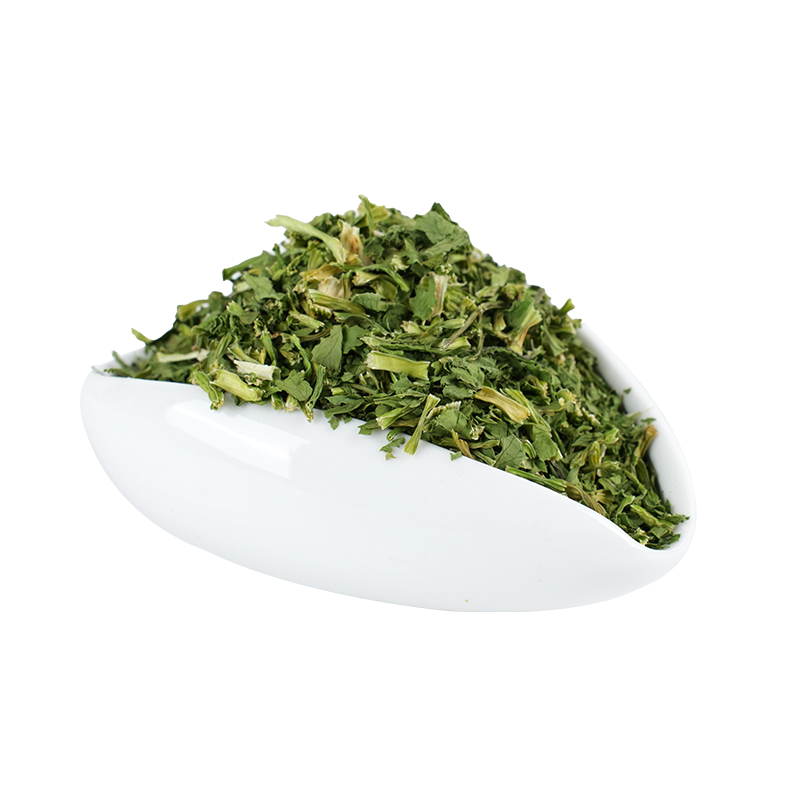 Dehydrated Coriander Leaf and Bulk Dried CorianderShelf-stable coriander retains citrusy flavor and green color for curries, soups, spice blends, and long-term storage.View Product →
Many herb blends also depend on alliums and warm spices for base depth. Garlic, onion, ginger, cumin, and white pepper are not leafy herbs, but they share the same procurement logic: form, particle size, and volatile retention decide the final flavor. A dry seasoning blend may need a fine powder for even distribution, while a snack coating may need a coarser granulation to avoid dusting.
What to specify when buying cooking herbs
Cooking herbs are agricultural materials, so a specification is a risk-control document. It should state the species and plant part, because “parsley” or “coriander” alone is not enough. It should also define cut size or mesh, moisture limit, water activity, color standard, flavor profile, microbial limits, packaging format, and lot traceability. For export buyers, allergen controls, pesticide residue limits, and certification scope should be confirmed before the first order.
- Species and plant part: leaf, seed, stem, or blend, with the botanical name where available.
- Physical form: whole leaf, flake, coarse powder, or fine mesh, with a measurable size range.
- Moisture and water activity: limits that match your storage and shelf-life expectations.
- Sensory standard: color, aroma, and flavor benchmarks, ideally with a retained sample.
- Microbiological and residue limits: aligned with the destination market and product category.
- Packaging and traceability: lot code, pack size, barrier properties, and storage conditions.
Ask for a certificate of analysis with each lot, not only a brochure claim. A supplier may hold ISO 9001, ISO 22000, GAP, AEO, and SC documentation; the buyer should check the scope, certificate number, and expiry date. An organic raw material claim should also come with a clear chain of custody and a certificate that matches the actual product being shipped.
Match the form to the application
In convenience foods, dried leaf and flake are often chosen for visual identity. A dehydrated vegetable soup, instant noodle cup, or ready meal needs pieces that rehydrate evenly and do not turn into mush. In sauces and seasoning blends, powders are usually more practical because they disperse quickly and do not create visible speckling unless that is the desired look. In baked goods and dry beverage mixes, fine powders also help avoid settling and uneven flavor distribution.
For snack seasoning, the particle size should match the application method. A fine powder may dust too heavily or clog feeders, while a coarse flake may not adhere evenly. For meat marinades, a powder can dissolve into the brine, but a coarse herb may be preferred for appearance. The same cooking herbs can require different specifications on two production lines, even when the finished product looks similar.
A supplier with both dehydrated herb and dehydrated vegetable powder capabilities can help compare forms without forcing a single solution. That matters when a product developer wants to test a flake for visual appeal and a powder for flavor uniformity in the same trial.
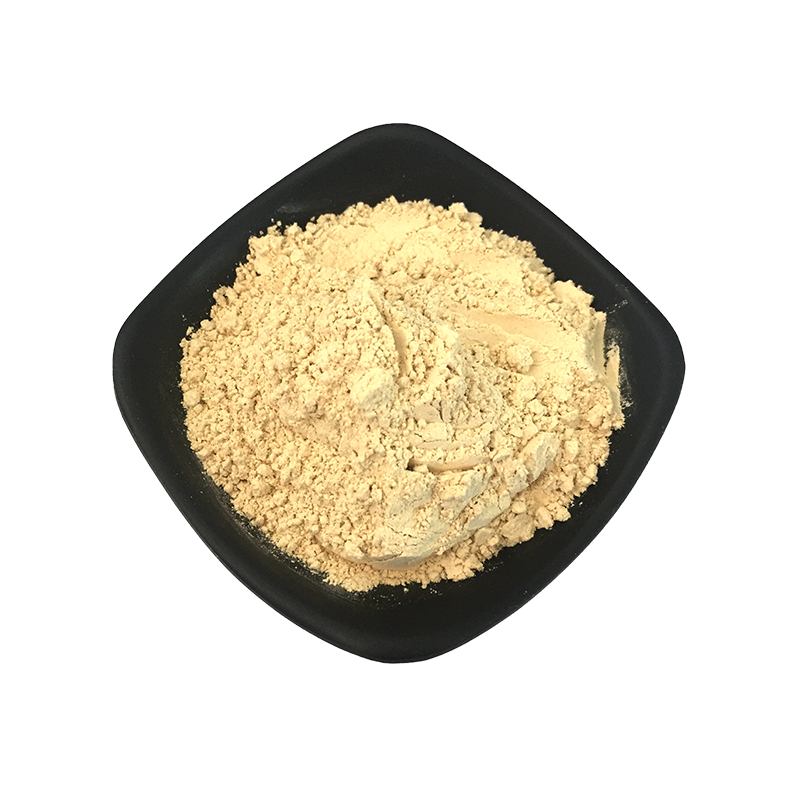 Dehydrated Garlic Powder for Seasonings and Bulk SupplyFine garlic powder disperses evenly in soups, marinades, spice blends, and dry rubs while offering shelf-stable bulk convenience.View Product →
Garlic powder is a useful example because it appears in herb blends, marinades, soups, and snack seasonings. The buyer should ask whether the powder is intended for direct blending or for reconstitution, and whether the supplier can hold a consistent mesh and aroma profile from lot to lot.
Storage and handling decide the last 20% of quality
Even a well-dried herb can fail in storage. Moisture pickup can cause caking, browning, and microbial risk. Oxygen and light attack color and volatile oils. Heat accelerates both. Powders are especially vulnerable because their surface area is high, so a warehouse that is acceptable for whole dried vegetables may be too humid for fine herb powders.
Use sealed, food-grade packaging with appropriate barrier properties, keep pallets off the floor, and rotate stock by lot. For opened bags, reseal tightly and use within a defined production window. If you need a practical reference, this guide to proper storage of dehydrated vegetables covers the same core risks: moisture, oxygen, light, heat, and pest control.
Supplier questions that reveal more than a brochure
A supplier’s ability to answer process questions is often more useful than a list of certifications. Ask how the herb is washed, blanched if applicable, dried, cooled, milled, and packed. Ask where the raw material is grown and how incoming lots are tested. Ask what happens when a lot misses the color standard or moisture limit. These answers show whether the supplier controls the process or simply trades finished goods.
- Can you provide a specification sheet with moisture, mesh, microbial limits, and packaging details?
- Which certifications apply to this exact product, and what is their scope?
- How do you verify raw material origin and organic status where claimed?
- What is the typical lead time, minimum order, and lot size for a trial order?
- Can you supply a retained sample and match it on the next shipment?
- How do you control color, aroma, and foreign matter after milling and before packing?
A manufacturer with its own dehydration lines, laboratory, and export documentation can usually answer these questions with fewer handoffs. That matters for cooking herbs because small process differences can create large sensory differences in a finished soup, sauce, or snack.
A practical buying decision
Start with the sensory target, then define the process, storage conditions, and specification. Test at least two forms of the same cooking herb in the real application, not only in water. Compare flavor after the full cook or bake, not just in the raw sample. Then compare cost per finished serving, including waste, rework, and rejected lots.
The right supplier is the one that can keep the chosen form consistent from lot to lot. Whether the final product needs dehydrated chives, coriander, garlic powder, or another herb form, the buying decision should be based on application fit and documented control, not on the lowest quoted price per kilo.


 Xinqian Village (Dehydrated Fruit and Vegetable Industrial Park), Duotian Street, Xinghua City, Taizhou City, Jiangsu Province, China
 +86-13852647168

