

 English
 中文简体
中文简体Content
- 1 Are Dried Veggies the Same as Fresh? The Core Difference Explained
- 2 What Are Dehydrated Vegetables?
- 3 Nutritional Comparison: Dehydrated Vegetables vs. Fresh
- 4 Common Types of Dehydrated Vegetables and Their Uses
- 5 Key Advantages of Dehydrated Vegetables Over Fresh
- 6 Limitations and When Fresh Is the Better Choice
- 7 How to Evaluate Dehydrated Vegetable Quality
- 8 The Growing Role of Dehydrated Vegetables in Modern Food Systems
Are Dried Veggies the Same as Fresh? The Core Difference Explained
Dried and fresh vegetables come from the same source, but they are not the same product. The dehydration process removes 80–95% of the moisture content from fresh vegetables, dramatically changing their texture, weight, and in some cases their nutritional profile — while concentrating their flavor and dramatically extending shelf life.
Fresh vegetables contain high water content — spinach is approximately 91% water, broccoli around 89%, and carrots about 88%. When that moisture is removed through controlled heat, air drying, freeze-drying, or vacuum drying, what remains is a shelf-stable, lightweight product that retains much of the original vegetable's fiber, minerals, and macro-nutrients.
So are they the same? Nutritionally, largely yes — with important nuances. Texturally and in terms of water-soluble vitamin content, no. Understanding where they differ and where they align is key to making informed choices for cooking, purchasing, and food manufacturing.
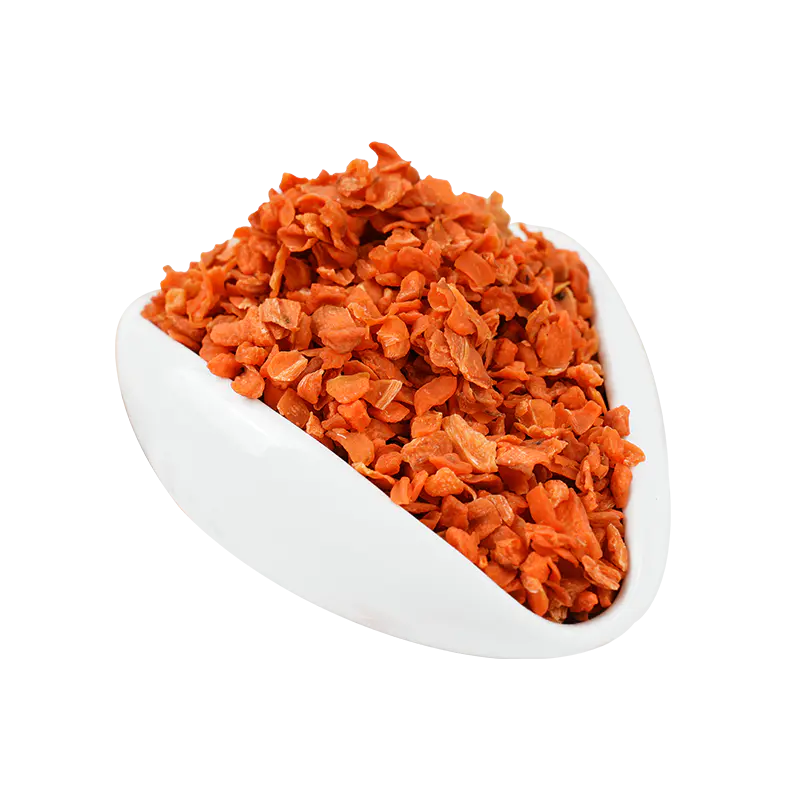
What Are Dehydrated Vegetables?
Dehydrated vegetables are fresh vegetables that have undergone a controlled moisture-removal process. The goal is to reduce water activity to a level — typically below 0.60 aw — at which microbial growth and enzymatic spoilage cannot occur, making the product safe and stable at ambient temperature for months to years.
The term "dehydrated vegetables" covers several distinct processing methods, each yielding different textures, flavors, and nutritional outcomes:
- Hot air drying (convection drying)— the most common and cost-effective industrial method; vegetables are exposed to heated airflow at 50–80°C until moisture targets are reached
- Freeze-drying (lyophilization)— vegetables are frozen and moisture is removed via sublimation under vacuum; preserves structure and nutrients best, but is significantly more expensive
- Drum drying— puréed or sliced vegetables are dried on heated rotating drums; used for powders and flakes
- Spray drying— liquid vegetable extracts are atomized into a heated chamber; used primarily for vegetable powders in flavoring and supplement applications
- Sun drying and solar drying— traditional low-cost methods still used in certain regions for tomatoes, chilies, and herbs
Most commercially available dehydrated vegetables are produced via hot air drying or freeze-drying, with the latter commanding a premium due to its superior quality retention.
Nutritional Comparison: Dehydrated Vegetables vs. Fresh
When comparing dehydrated and fresh vegetables on a per-weight basis, dehydrated vegetables appear far more nutrient-dense — simply because water has been removed. A fair comparison requires adjusting for the rehydration ratio (typically 1:6 to 1:10 by weight for most vegetables).
|
Nutrient retention in dehydrated vegetables compared to fresh (rehydrated equivalent basis) |
||
|
Nutrient |
Retention in Hot Air Dried |
Retention in Freeze-Dried |
|
Dietary Fiber |
~95–100% |
~98–100% |
|
Minerals (iron, calcium, potassium) |
~90–100% |
~95–100% |
|
Vitamin A / Beta-Carotene |
~70–90% |
~90–97% |
|
Vitamin C |
~30–60% |
~80–95% |
|
B Vitamins (B1, B2, B6) |
~40–70% |
~75–90% |
|
Carbohydrates / Natural Sugars |
~100% (concentrated) |
~100% (concentrated) |
The key takeaway: minerals, fiber, and fat-soluble vitamins are well preserved across both methods. The primary nutritional trade-off is in heat-sensitive, water-soluble vitamins — particularly Vitamin C and certain B vitamins — which degrade during hot air drying. Freeze-drying minimizes this loss substantially.
It is also worth noting that fresh vegetables begin losing nutrients from the moment they are harvested. Studies have found that some fresh produce loses up to 15–55% of Vitamin C within a week of harvest during typical retail storage and transport. Dehydrated vegetables processed promptly after harvest can in some cases deliver comparable or better nutrient levels than "fresh" produce that has spent days in transit.
Common Types of Dehydrated Vegetables and Their Uses
The range of commercially available dehydrated vegetables is broad. Different product forms — slices, dices, flakes, granules, and powders — serve distinct applications across the food industry and consumer market.
Dehydrated Onion and Garlic
Among the highest-volume dehydrated vegetables globally, onion and garlic are available as flakes, granules, minced, and powder. They are foundational ingredients in seasoning blends, soups, sauces, snack coatings, and processed meats. Dehydrated garlic powder is approximately 3–4 times more concentrated in flavor than fresh garlic by equivalent dry weight.
Dehydrated Tomatoes
Sun-dried tomatoes, tomato powder, and tomato flakes are widely used in pasta sauces, pizza toppings, soups, and instant noodle seasonings. Drying concentrates tomato's natural umami compounds and lycopene content — notably, lycopene bioavailability is actually enhanced by heat processing compared to raw tomatoes.
Dehydrated Spinach and Leafy Greens
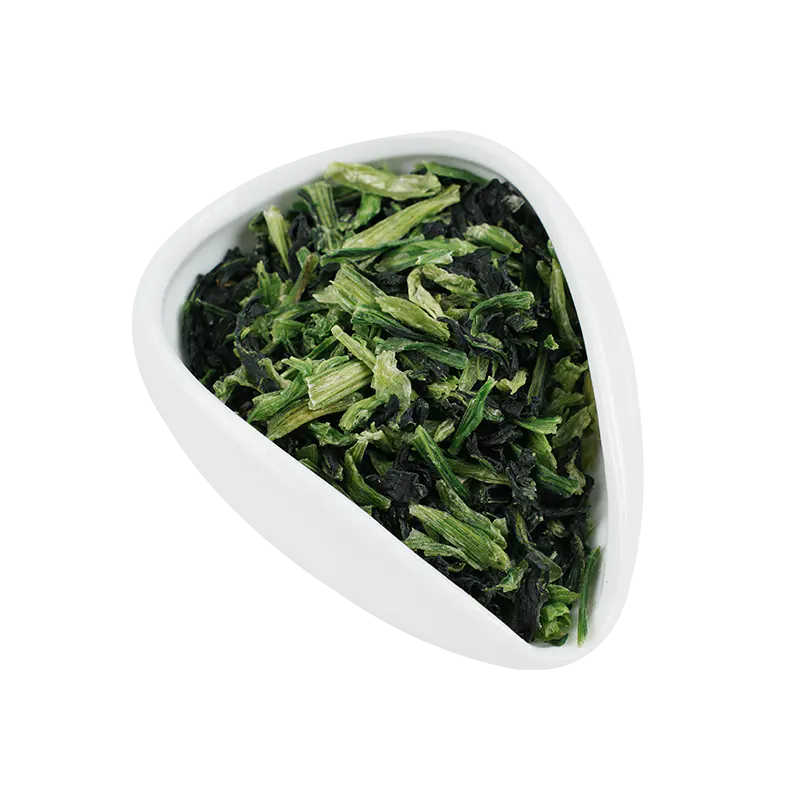
Spinach flakes and powder are extensively used in pasta manufacturing, health supplements, smoothie powders, and baby food formulations. Dehydrated spinach retains its iron and calcium content well, making it a practical vehicle for delivering these minerals in concentrated form.
Dehydrated Carrots, Peas, and Corn
These are staples in instant soups, dehydrated meal kits, military rations, and camping foods. Their ability to rehydrate quickly and closely approximate fresh texture makes them preferred choices for ready-to-cook product developers.
Dehydrated Mushrooms
Shiitake, porcini, and mixed mushroom powders and slices are valued for their intense umami flavor contribution. They are used in soups, gravies, seasonings, and as natural flavor enhancers in plant-based food products — a fast-growing application area as manufacturers seek clean-label umami sources.
Vegetable Powders
Powdered forms of broccoli, kale, beet, sweet potato, and mixed greens have grown significantly in demand through the health supplement and functional food channels. These are incorporated into protein powders, meal replacement shakes, health bars, and fortified snacks as convenient nutrient delivery formats.
Key Advantages of Dehydrated Vegetables Over Fresh
For food manufacturers, commercial kitchens, and consumers in specific use cases, dehydrated vegetables offer concrete advantages that fresh produce cannot match:
- Extended shelf life— properly packaged dehydrated vegetables typically last 1–3 years at ambient temperature, versus days to weeks for fresh
- Reduced weight and volume— up to 90% weight reduction lowers transportation and storage costs significantly across supply chains
- Year-round availability— dehydrated vegetables eliminate seasonal supply constraints and price volatility
- Consistent quality and standardization— particle size, moisture level, and color can be tightly controlled, enabling uniform flavor delivery in manufactured products
- Reduced food waste— no spoilage loss during storage; particularly valuable in regions with limited cold chain infrastructure
- No washing or prep required— reduced labor costs for commercial kitchens and food processors
These advantages explain why dehydrated vegetables are integral to the supply chains of instant food manufacturers, military and emergency food suppliers, expedition food brands, and large-scale catering operations worldwide.
Limitations and When Fresh Is the Better Choice
Dehydrated vegetables are not a universal replacement for fresh. There are contexts where fresh produce remains clearly superior:
- Raw salads and fresh preparations— texture after rehydration rarely matches the crunch and juiciness of fresh vegetables for raw consumption
High Vitamin C applications — where Vitamin C content is a priority (e.g., in fresh juice or salads), hot-air-drie
- d vegetables are a poor substitute
- Premium culinary presentations— fine dining and high-end food service applications typically require the visual appeal and exact texture only fresh produce delivers
- Caloric density awareness— because water is removed, dehydrated vegetables are more calorie-dense per gram; portion-for-portion eating of dehydrated product (without rehydrating) delivers more calories and sugar than the fresh equivalent
The practical answer for most applications is not "either/or" but strategic selection: fresh for raw, visual, or immediate use; dehydrated for cooking, manufacturing, long-term storage, and supply chain efficiency.
How to Evaluate Dehydrated Vegetable Quality
For B2B buyers and procurement teams sourcing dehydrated vegetables, quality evaluation goes beyond appearance. Key parameters to assess include:
- Moisture content— should be within specification, typically 5–8% for most dehydrated vegetables to ensure shelf stability
- Color and uniformity— vibrant, true-to-source color indicates proper drying conditions and minimal oxidation
- Rehydration ratio— a quality indicator of cell structure preservation; higher rehydration ratios suggest gentler drying
- Microbial counts— total plate count, yeast, mold, and pathogen testing (Salmonella, E. coli) should meet food safety standards
- Pesticide residue testing— critical for export markets; EU and US import standards require compliance documentation
- Heavy metal screening— particularly relevant for root vegetables and leafy greens sourced from certain agricultural regions
- Packaging integrity— multi-layer moisture-barrier bags, nitrogen flushing, or vacuum packaging are indicators of quality-conscious handling
Reputable suppliers provide full Certificates of Analysis (COA) covering all parameters above, along with traceability documentation linking the product to its farm source. For regulated markets, FSSC 22000, BRC, or ISO 22000 certification from the processing facility is a baseline expectation.
The Growing Role of Dehydrated Vegetables in Modern Food Systems
The global dehydrated vegetables market was valued at approximately $75 billion USD in 2023 and is projected to grow at a CAGR of 5–7% through 2030, driven by rising demand across several converging trends:
- Plant-based food expansion— dehydrated vegetables are key ingredients in the growing plant-based meat, snack, and ready meal categories
- Emergency and disaster preparedness— government stockpiling and consumer emergency preparedness kits are driving long-shelf-life vegetable demand
- Sustainability focus— dehydration significantly reduces food loss; with global food waste representing roughly one-third of all food produced, processing surplus fresh produce into dehydrated form is gaining policy and commercial support
- Health supplement growth— vegetable powders are a foundational ingredient in the booming greens supplement and functional nutrition market
- E-commerce and direct-to-consumer food— lightweight, shelf-stable dehydrated products are ideally suited to online grocery and meal kit delivery models
Whether evaluated from a nutritional, logistical, economic, or environmental standpoint, dehydrated vegetables represent one of the most versatile and practical ingredients available to modern food businesses — a category that bridges the gap between agricultural production and consistent, scalable food manufacturing.
 Previous


 Xinqian Village (Dehydrated Fruit and Vegetable Industrial Park), Duotian Street, Xinghua City, Taizhou City, Jiangsu Province, China
 +86-13852647168
